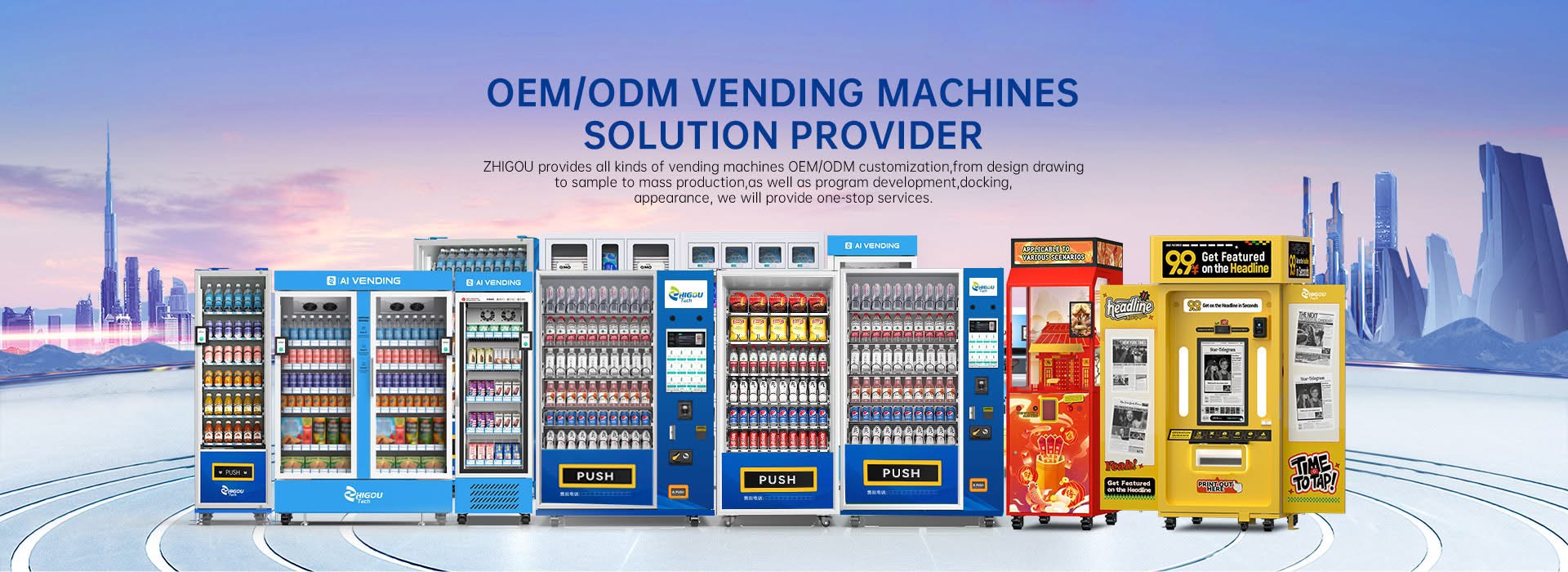
There are two types of automatic vending machine operators: those who wait for problems to arise and those who take proactive measures to prevent them. Waiting for that worrying phone call—whether it’s about a machine malfunction, a store manager’s complaint, or lost sales—is a highly stressful and costly way to run a vending business. An active management approach centered on ongoing vending machine maintenance is the key to smoother, more profitable operations. Rather than reacting passively to unexpected issues, it’s better to prevent them.
How Often Should a Vending Machine Be Cleaned?
There are several factors that influence how often you should clean a digital vending machine for sale, including its location, the products it sells, and its usage. Generally speaking, it’s a good idea to do a full deep clean about every three months or so. This will ensure that the self-service vending machines remain in good working condition, look good, and are hygienic for your customers. In addition to cleaning, it’s also important to conduct routine maintenance on the automatic machine, including checking the refrigeration system and restocking products so they’re fresh. This will improve the customer experience, helping you retain your customers.
Daily or routine cleaning:
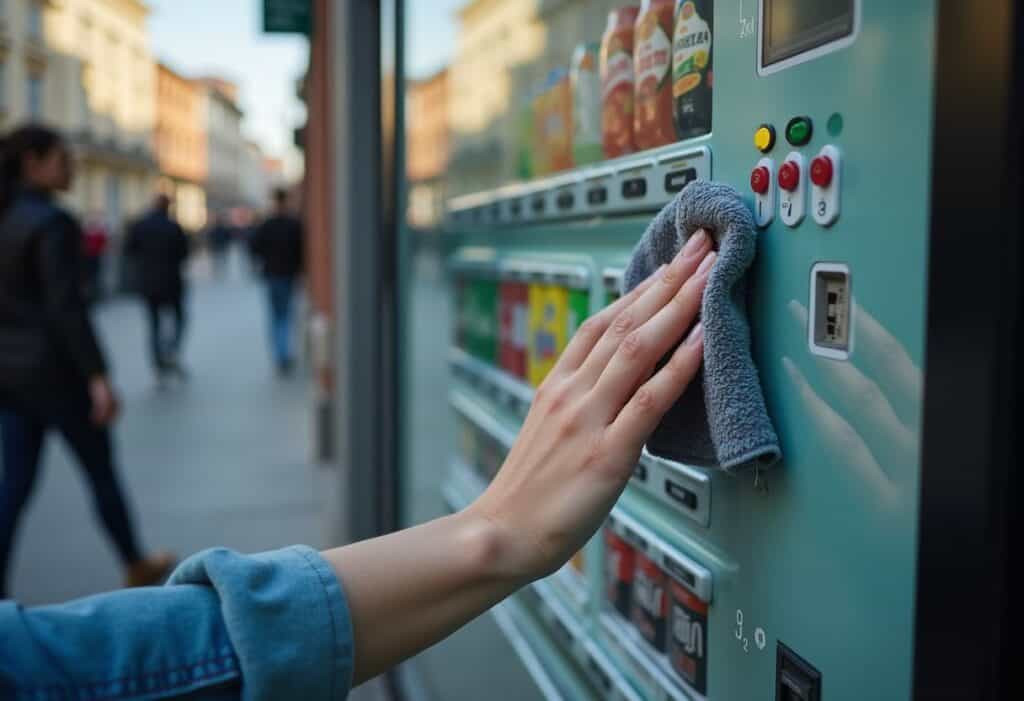
First, operators should wipe down high-touch surfaces every day. This includes buttons, handles, and payment areas. Moreover, removing visible dirt and fingerprints keeps self-service vending machines looking professional and inviting. You should also empty the trash and check for spills daily. As a result, you prevent buildup that can attract bacteria and unpleasant odors. Consistent vending machine cleaning at this level reduces hygiene risks significantly. In addition, it helps maintain a positive impression for users while supporting better machine performance and reliability over time.
Weekly inspection and cleaning:
Inspect the digital vending machine for sale interior, shelves, product display areas, shipping mechanisms, door seals, and other accessible components, and remove dust, debris, and product residues as necessary based on the actual situation.
Regular deep cleaning:
According to the maintenance requirements of the manufacturer and the actual usage conditions of the automatic vending machine, perform more thorough cleaning on the internal surfaces of the machine, cooling-related areas, drainage components, and inaccessible locations.
Clean immediately upon contamination:
If there is spillage of beverages, damaged product packaging, food residue, or other contamination, clean immediately instead of waiting for the next scheduled maintenance. The specific cleaning schedule should be adjusted according to the type of goods, sales volume, usage environment, and local regulations.
Factors That Affect Cleaning Frequency
Not all self-service vending machines require the same cleaning schedule. For example, machines in high-traffic locations need more frequent attention. Similarly, food and beverage vending machines require stricter hygiene practices than others. Weather conditions can also play a role, especially in outdoor setups. Therefore, operators should adjust automatic vending machine cleaning routines based on usage and environment. This flexible approach ensures better results.
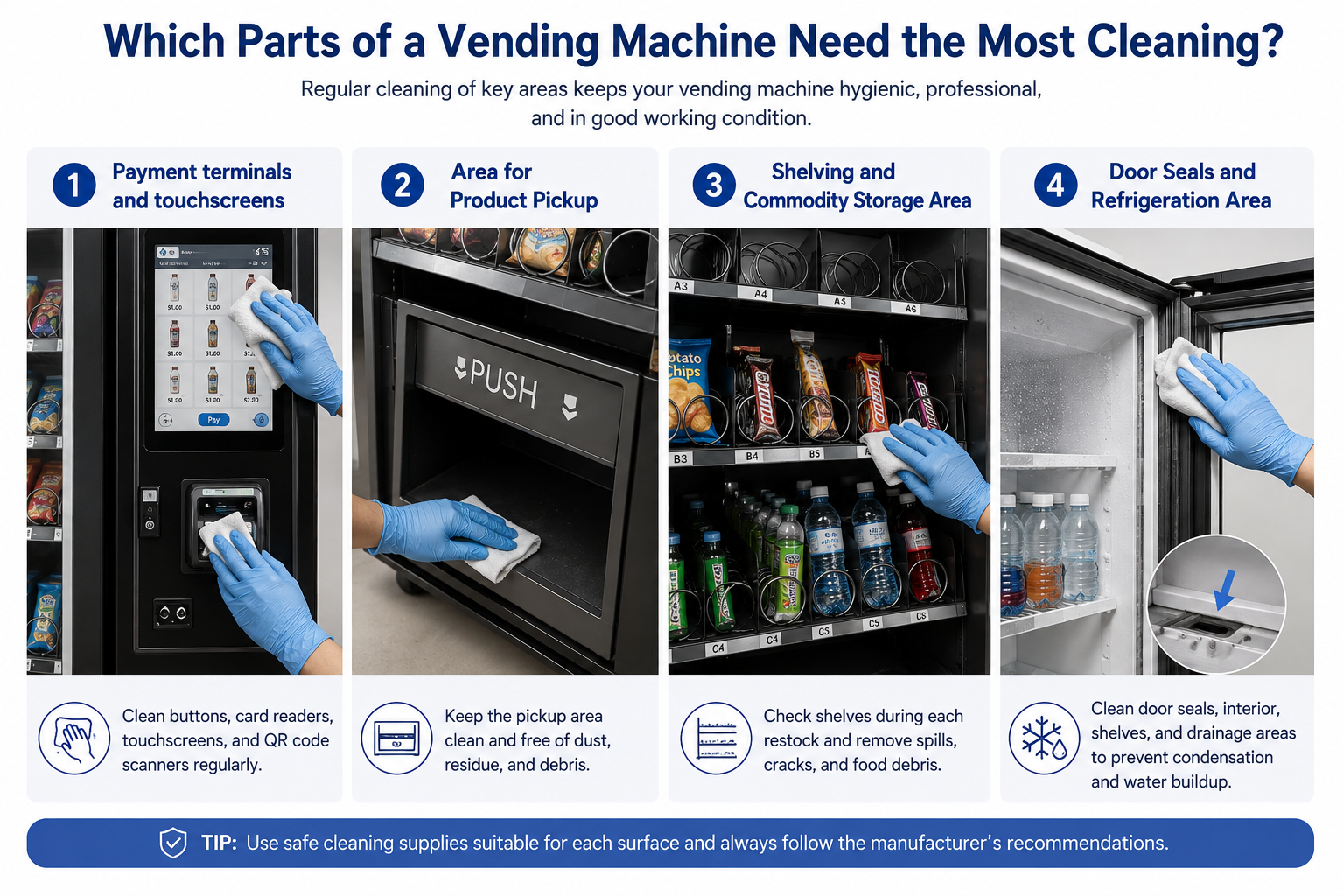
Which Parts of a Vending Machine Need the Most Cleaning?
Not every part of a vending machine needs to be cleaned. Areas that consumers regularly touch or places where moisture and food residue can build up should receive special attention from operators.
1. Payment terminals and touchscreens
Customers often touch buttons, card readers, touchscreens, and QR code scanners. Frequent cleaning maintains the equipment's professionalism and contributes to a hygienic consumer interface.
Cleaning supplies should work with the particular surface material and the manufacturer's recommendations. Additionally, excessive moisture should be kept away from electronic components.
2. Area for Product Pickup
One of the areas of a digital vending machine for sale that is used the most is the product pickup area. It can gather product residue, dust, and packing debris. For this reason, routine cleaning and inspection are crucial.
3. Shelving and Commodity Storage Area
During each replenishment, the shelves should be inspected. If there are spills of beverages, damaged packaging of goods, food debris, or other residues, they should be promptly cleaned.
For machines selling packaged snacks and beverages, keeping the shelves clean not only helps maintain a good image of the equipment but also facilitates staff in checking the inventory.
4. Door Seals and Refrigeration Area
Refrigerated vending machines need to pay more attention to door seals, shelves, the interior of the cabinet, and drainage areas, as these positions may produce condensation water.
The FDA Food Code also has drainage-related requirements for equipment areas that may accumulate water due to condensation, food or beverage drips, and melting ice.
5. Shipping Facilities
Spirals, cargo tracks, pickup areas, and other shipping components may accumulate dust or product residues. They should be inspected regularly and cleaned when necessary. However, when cleaning, excessive moisture should be avoided from contacting electrical and mechanical components.
For more information on maintaining these machines, you can visit https://www.zhigouvendingmachine.com. We provide expert solutions and services to keep your automatic vending machine in great shape.
Vending Machine Cleaning Checklist
For daily operations, automatic vending machine operators can use a simple checklist:
Area | Recommended Action |
Touchscreen | Clean and inspect regularly |
Payment terminal | Clean according to the manufacturer's instructions |
Buttons | Wipe and inspect |
Door handles | Clean frequently |
Product pickup area | Check and clean regularly |
Shelves | Inspect during restocking |
Product compartments | Remove spills and residues |
Door seals | Inspect for dirt and moisture |
Refrigerated compartment | Clean according to maintenance instructions |
Dispensing mechanism | Inspect and clean when necessary |
Exterior cabinet | Wipe regularly |
Drainage areas | Inspect for moisture or residue |
The exact frequency should be adjusted according to the digital vending machine for sale, products, location, operating conditions, manufacturer recommendations, and applicable regulations.
What Happens if Vending Machines Aren’t Cleaned?
Failing to clean these self-service machines regularly can lead to a number of problems. Unclean machines are more likely to break down due to food spills, dust accumulation, or mechanical wear and tear. Additionally, unclean machines may deter customers, as people expect a clean, hygienic experience when purchasing food or drinks. This can ultimately affect sales, leading to decreased revenue for operators.
Call Us for a Free Consultation!
Are you struggling to keep your self-service vending machines clean and well-maintained? Call us today, and we’ll be right over for a free consultation! We offer professional cleaning, maintenance services, and much more to ensure your vending machines operate at their best.
Conclusion
So, how often should vending machines be cleaned? The most appropriate answer is not simply to say "once a week" or "once a month". The operators of automatic vending machine should formulate cleaning plans based on the types of goods sold, consumer traffic, usage environment, machine structure, and applicable food safety requirements. Surfaces that are frequently touched should be cleaned regularly; the interior of the machines should be inspected during daily maintenance and replenishment processes; and any spillage of beverages, residue of goods, or other contamination should be dealt with immediately. In addition, local food safety laws and the cleaning and maintenance guidelines supplied by the makers of food and beverage vending machines should be adhered to. The most recent NSF/ANSI 25-2025 explicitly lays out pertinent standard requirements for food and beverage vending machines, and the 2022 edition of the FDA Food Code might be a valuable resource for retail food and vending businesses. In conclusion, creating a consistent and ongoing cleaning and maintenance strategy improves customer confidence, equipment dependability, product quality, and the long-term operational success of vending enterprises, in addition to helping to assure food safety.